
Publications
VisTacAlign: Co-Training Dexterous Policies on Tactile Human and Robot Demonstrations
arXiv, September 2026
VisTacAlign co-trains 3D-visual-tactile dexterous policies on human and robot demonstrations by closing the human-robot gap in every modality: glove-tracked hand motion is retargeted to the robot hand, the human hand is replaced by the robot hand in the point cloud, and tactile glove signals are aligned to the robot fingertip sensors.
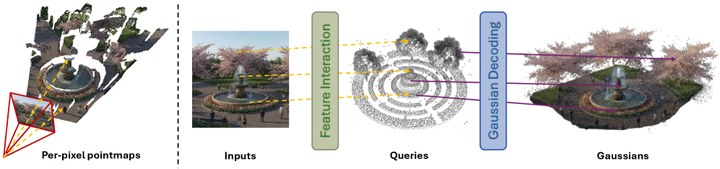
UniQueR: Unified Query-based Feedforward 3D Reconstruction
European Conference on Computer Vision (ECCV), September 2026
UniQueR formulates feedforward reconstruction as sparse 3D query inference, learning compact 3D anchor points that infer scene structure including occluded geometry in a single forward pass.
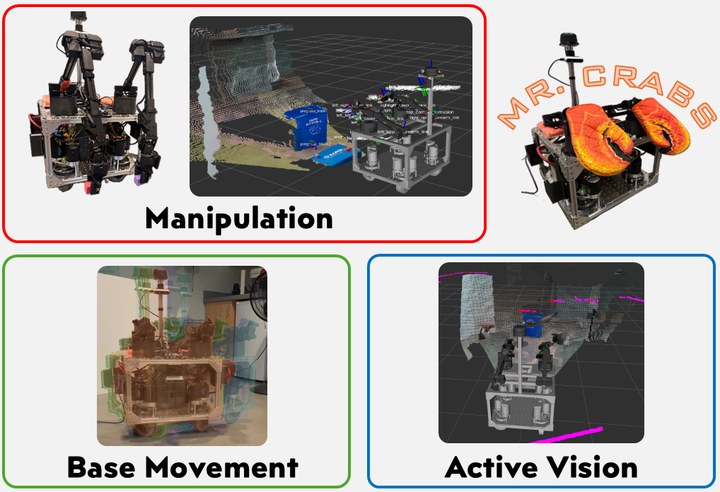
MR. CRABS: Mobile RGB-D Camera-LIDAR Robot for Autonomous Bimanual Manipulation & Sensing
ICRA Workshop on Act to Sense to Act Better, June 2026
A fully integrated perception system for near-ground bimanual mobile manipulation: a holonomic bimanual robot with dual RealSense depth cameras, a small LIDAR, and a pan-and-tilt bottom camera that improves mapping and search.
Learning to Drive is a Free Gift: Large-Scale Label-Free Autonomy Pretraining from Unposed In-The-Wild Videos
IEEE/CVF Conference on Computer Vision and Pattern Recognition (CVPR), June 2026
LFG learns a unified pseudo-4D representation of geometry, semantics, motion, and short-term future evolution directly from unposed, unlabeled single-view driving videos, reaching state-of-the-art planning with a single front camera.
TensorTouch: Calibration of Tactile Sensors for High Resolution Stress Tensor and Deformation for Dexterous Manipulation
IEEE Transactions on Robotics (T-RO), April 2026
TensorTouch is a comprehensive framework for stress tensor estimation from 3D optical tactile sensors, combining finite element analysis with deep learning to extract detailed contact information including stress tensors, deformation fields, and force distributions at pixel-level resolution.
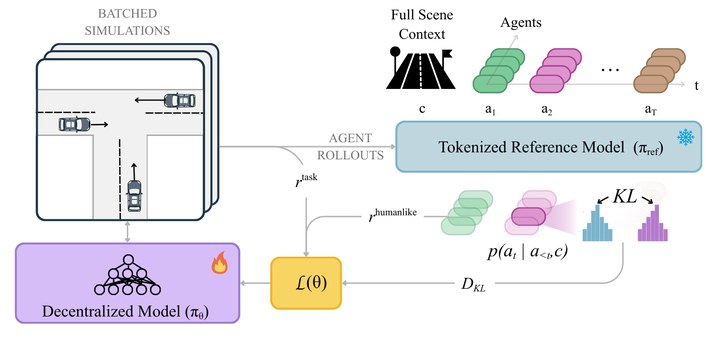
SPACeR: Self-Play Anchoring with Centralized Reference Models
International Conference on Learning Representations (ICLR), April 2026
SPACeR uses a pretrained tokenized autoregressive motion model as a centralized reference policy to guide decentralized self-play RL, matching human driving distributions with 10x faster inference and 50x fewer parameters than imitation models.
DexFruit: Dexterous Manipulation and Gaussian Splatting Inspection of Fruit
IEEE Robotics and Automation Letters (RA-L), December 2025
DexFruit is a robotic manipulation framework that enables gentle, autonomous handling of fragile fruit using optical tactile sensing and introduces FruitSplat, a novel technique to represent and quantify visual damage in high-resolution 3D via Gaussian Splatting.
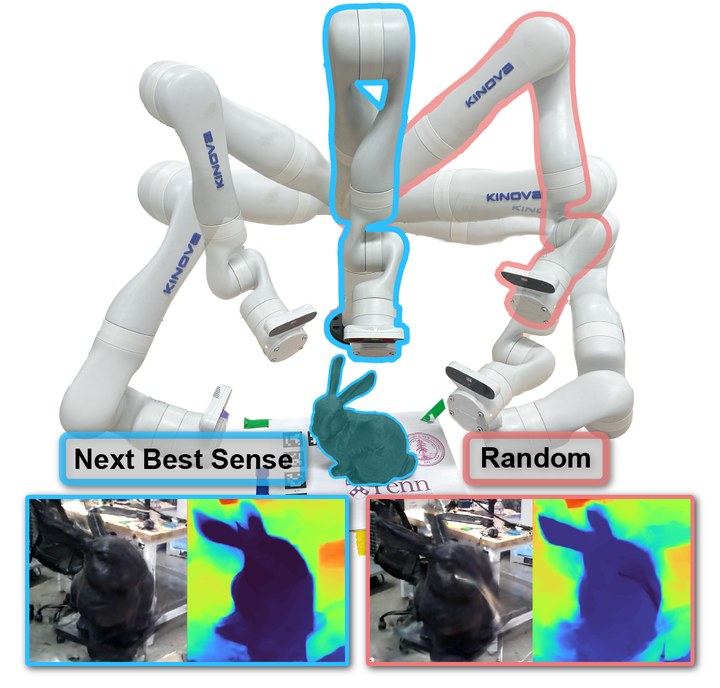
Next Best Sense: Guiding Vision and Touch with FisherRF for 3D Gaussian Splatting
IEEE International Conference on Robotics and Automation (ICRA), May 2025 Oral
Next Best Sense draws upon state of the art vision models to train few-shot Gaussian Splatting scenes, and turns to impressive next best view selection methods to guide robotic manipulator next best view and touch selection in the wild.
J-PARSE: Jacobian-based Projection Algorithm for Resolving Singularities Effectively in Inverse Kinematic Control of Serial Manipulators
ArXiv, May 2025
J-PARSE is a method for smooth first-order inverse kinematic control of serial manipulators near kinematic singularities, expanding the available workspace for applications in servoing, teleoperation, and learning.
Touch-GS: Visual-Tactile Supervised 3D Gaussian Splatting
IEEE/RSJ International Conference on Intelligent Robots and Systems (IROS), October 2024 Oral
Touch-GS combines the power of vision and touch to generate high-quality few-shot and challenging scenes, such as few-view object centric scenes, mirrors, and transparent objects.
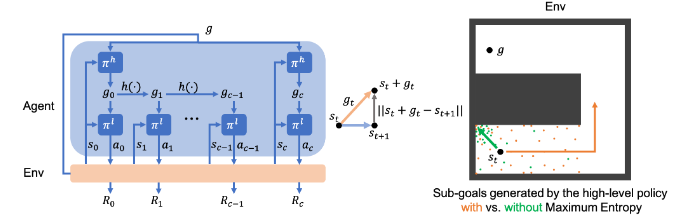
SHIRO: Soft Hierarchical Reinforcement Learning
Arxiv, December 2022
A method for soft hierarchical reinforcement learning to accelerate learning for challenging locomotion tasks
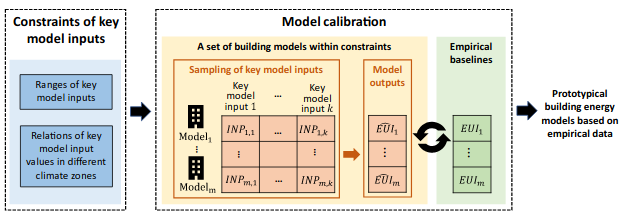
Individualized Empirical Baselines for Evaluating the Energy Performance of Existing Buildings
Science and Technology for the Built Environment, October 2022
The evaluation of empirical baselines for evaluating the energy performance of multiple buildings.
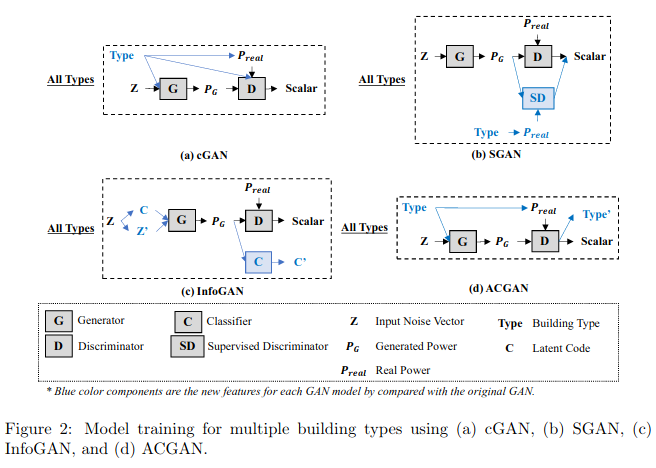
Evaluating Performance of Different Generative Adversarial Networks for Large-Scale Building Power Demand Prediction
Energy and Buildings, May 2022
A comprehensive evaluation of different types of GANs at scale for building power demand prediction.
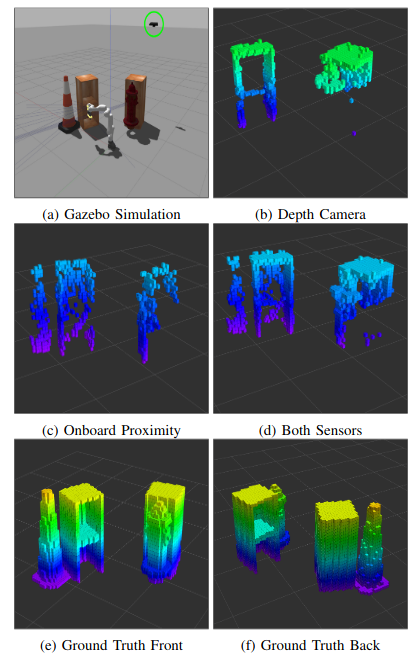
Volumetric Data Fusion of External Depth and Onboard Proximity Data For Occluded Space Reduction
2021 IEEE/RSJ International Conference on Intelligent Robots and Systems [IROS] 4th Workshop on Proximity Perception, September 2021
A probabilistic fusion of external depth and onboard proximity data into a volumetric 3-D map of a robot’s environment, reducing the space a manipulator must treat as unknown.
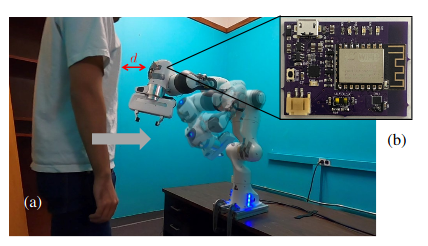
Self-Contained Kinematic Calibration of a Novel Whole-Body Artificial Skin for Human-Robot Collaboration
2021 IEEE/RSJ International Conference on Intelligent Robots and Systems [IROS], September 2021
A system for calibrating and implementing a arbitrally placed robotic skin for physical human-robot interaction.
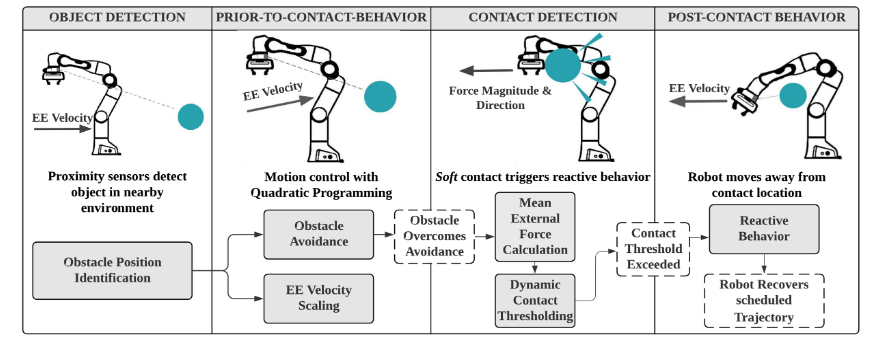
Contact Anticipation for Physical Human-Robot Interaction with Robotic Manipulators using Onboard Proximity Sensors
2021 IEEE/RSJ International Conference on Intelligent Robots and Systems [IROS], September 2021
A system for enabling robotic manipulators with onboard proximity sensors to anticipate and react on contact.
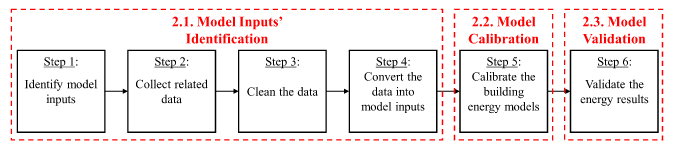
Development of New Baseline Models for U.S. Medium Office Buildings Based on Commercial Buildings Energy Consumption Survey Data
Science and Technology for the Built Environment, Volume 26, Issue 9, May 2020
The construction of new models for energy usage prediction for medium office buildings in various environments.
Theses
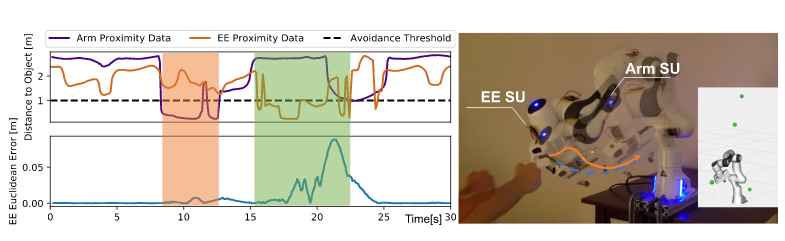
Enabling Close Proximity Human Robot Collaboration via Distributed, Self-Calibrating Robotic Skin
University of Colorado Boulder Undergraduate Thesis in Computer Science, May 2021
My undergraduate thesis covering my prior 2 years of robotics research.